
What Drives the Price of a Boundary Survey
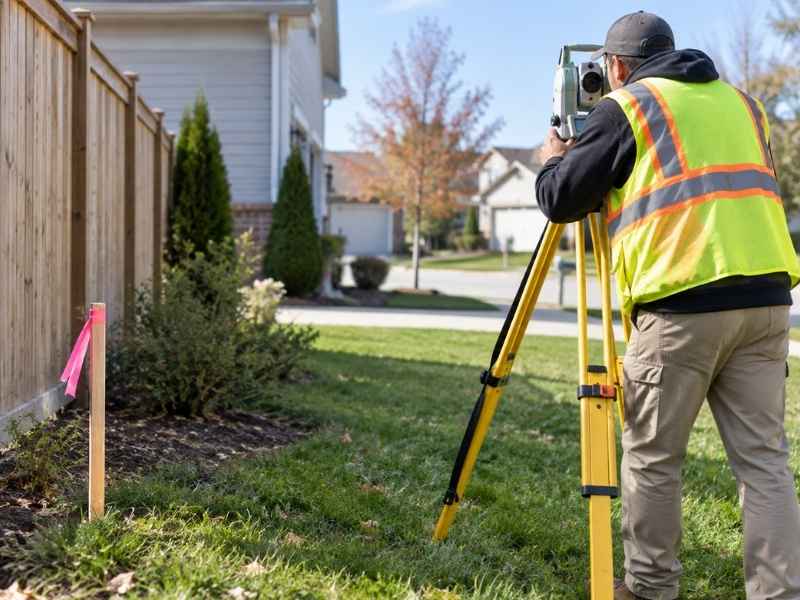
Ask three property owners what they paid for a boundary survey price. You will likely get three different answers. This is not a trick. The price depends on real things about your land. These things can be very different from one property to the next.
If you are planning to pay for a survey, it helps to know what affects the cost. This can help you get a fair price. It can also help you avoid surprises once the work begins.
A boundary survey finds the legal lines of a property. The surveyor looks at old records, old maps, and takes new measurements in the field. The surveyor also finds or places markers. Then the surveyor makes a map that shows your true property lines. All of this work is what sets the price.
Parcel Size and Shape Affect Surveying Time
A bigger piece of land often takes more time to survey than a small one. There is simply more ground to measure and more corners to find. But size is not the only thing that matters. Shape matters too.
A simple, square or rectangle-shaped lot is faster to survey. A lot with odd angles, many corners, or a strange shape takes longer. Older neighborhoods and newer ones, so lot shapes can be very different from one area to another.
- Square or rectangle lots usually need less work
- Lots with odd shapes or many corners take more time
- Larger lots may take more time, even if the shape is simple
Ask your surveyor how your lot’s size and shape affect your price. This can help you understand why costs are not the same for every property.
Terrain and Site Access Can Increase Field Effort
A flat, open, and easy-to-reach property is the easiest to survey. But most properties are not perfect like this. The land and how easy it is to reach both affect the time and cost of a survey.
Steep hills, thick woods, wet areas, or heavy brush slow down the work. Crews must move slowly and carry equipment carefully in these spots. Hard-to-reach land can also add time. This includes a locked gate, a long private road, or land surrounded by other properties.
Tell your surveyor about anything that could make your land hard to reach. This includes gates, locked areas, unfriendly pets, or weather that could affect the work.
Missing Boundary Evidence Can Require Additional Fieldwork
Every boundary survey starts with research. The surveyor checks old deeds, maps, and past surveys. When this information is clear and matches up, the work moves faster.
Problems happen when this information is missing, damaged, or does not match. Old markers can be buried, moved, or gone completely. Some older homes have deed papers that do not match what a neighbor’s survey shows. This is more common in older parts of the city.
When this happens, the surveyor may need to check more records. They may also need to look at a neighbor’s property or do extra work in the field. This takes more time and adds to the cost. But it is needed to make sure the survey is correct.
Existing Improvements Can Complicate Boundary Measurements
A boundary survey is not just about measuring open land. It also looks at fences, sheds, driveways, walls, and other structures near the property lines.
More structures near a boundary line usually means more time. The surveyor has to measure and record how each one lines up with the true property line. This is common on older homes where a fence or garden was built before anyone checked the real property line.
Structures near a boundary can also show a problem called an encroachment. This means part of a structure sits on the neighbor’s land by mistake. Finding and recording an encroachment takes extra time and care. This adds to the cost of the survey.
Survey Scope and Deliverables Influence the Final Price
Not every boundary survey needs the same amount of detail. The type of work you need, and what you want at the end, both affect the price.
A basic survey with simple pin locations and a plat map costs less than a detailed survey. A detailed survey may include land elevation data, structure locations, or a full ALTA survey for a business deal. Some banks, title companies, or cities may require certain details before they accept a survey.
Make sure you know what your project actually needs before you ask for prices. If your survey is tied to a home closing, a permit, or a building project, ask your surveyor how the size of the job affects both price and how long it will take.