
Why Two Licensed Land Surveyors May Approach the Same Property Differently
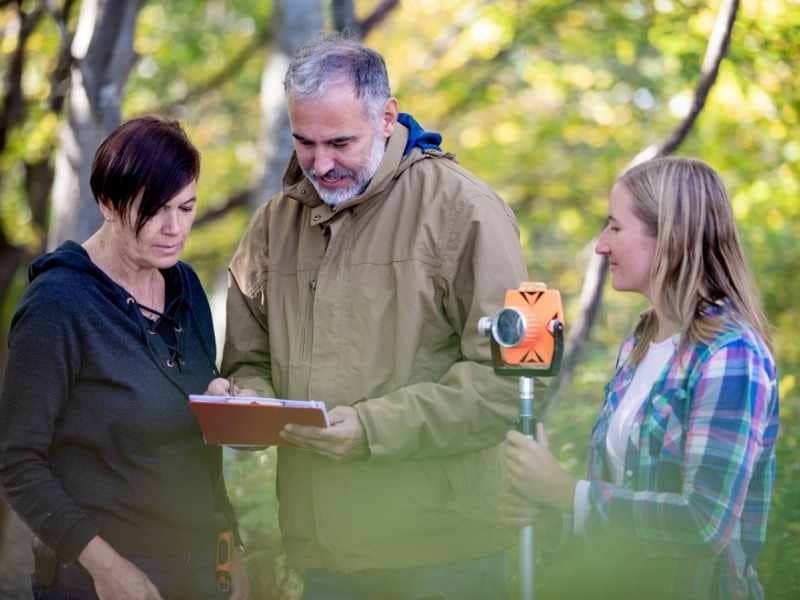
You hire one licensed land surveyors. A neighbor, a past owner or a lender hired a different one years ago. The two reports do not match exactly. Now you are wondering which one is right.
This happens more than people think. It does not always mean a mistake was made. Surveying takes judgment, not just measuring. Two skilled surveyors can reach slightly different answers while both staying within the rules.
In Indianapolis, homes range from century-old city lots to new homes at the edge of town. This kind of difference comes up often enough that it helps to understand it before it causes worry.
Why Surveying Requires Professional Judgment
A licensed land surveyor does more than take measurements. They study old records, look at current conditions, and make a professional call about where a boundary line really sits.
Property lines are rarely as simple as one number on a deed. Old descriptions can be unclear. Fences or trees can shift over time. A surveyor has to weigh all of this and reach a professional answer, much like a doctor looks at symptoms before making a diagnosis.
This Is Normal, Not a Red Flag
Two licensed surveyors looking at the same property can draw slightly different lines while both following the same rules. This does not mean one surveyor is wrong. It means boundary work often needs judgment based on the evidence at hand, not one fixed formula.
Different Records Can Influence Survey Decisions
The records a surveyor looks at can shape their answer. Deeds, old plats, past surveys and tax records do not always match each other, especially on older properties.
Neighborhoods with records going back over a hundred years. Old descriptions sometimes used landmarks that no longer exist, like a certain tree or fence post. A surveyor working from those old records has to figure out what the original words meant. That can lead to a different answer than a surveyor working mainly from a newer plat.
Why Surveyors May Weigh Records Differently
Two surveyors might put more weight on different documents, even with the same set in front of them. One may lean more on an old recorded plat. Another may trust a past survey done for a neighboring lot. Both choices can be sound, even if they lead to slightly different lines.
Field Conditions May Change the Survey Approach
What a surveyor finds on-site can change their approach. Fences, old foundations, tree lines and other physical clues all shape a professional boundary decision.
Field conditions change over time. A fence that was correct ten years ago may have shifted, been rebuilt, or been placed in a slightly new spot since then. A surveyor working today sees different clues than one who worked the same property years back. That can lead to a different professional answer.
Seasonal and Site Access Factors
Weather affects fieldwork too. Snow, thick plants or muddy ground can limit what a surveyor can see during a visit. A surveyor working in early spring may spot different clues than one working in the middle of summer. That can change what gets written down.
Project Goals Shape the Survey Scope
The reason for a survey shapes how much detail it includes. A survey for a mortgage closing looks different from one for a construction project or a boundary fight.
A lender may only need a basic survey that checks buildings and lines. A contractor planning an addition may need a full ground survey with exact height data. A property owner in a boundary dispute may need a deeper legal survey with more digging into old records.
Two surveys of the same property, done for two different reasons, can look quite different without either one being wrong. The work was simply built around a different goal.
Questions to Ask Before Ordering a Survey
Before you hire a surveyor, explain your goal clearly. Ask what type of survey fits your case, whether it is a home sale, a construction job or a boundary question. This helps the surveyor plan work that matches what you truly need.
Consistent Standards With Different Professional Methods
Licensed surveyors all follow the same state rules and professional guidelines. The same rules do not mean the exact same steps. Two surveyors can follow the same rules and still reach a boundary answer through a different path.
Think of it like two builders making a strong wall using different but equally solid methods. The end result meets the same standard, even though the steps looked different.
If you get a survey that differs from an older one on the same property, this does not always mean someone made an error. It often shows updated field facts, different records used, or a different project goal. If the gap affects a closing, permit or building plan, ask your surveyor to explain their reasoning and what steps could fix any conflict.
Frequently Asked Questions
If two surveys disagree, which one is correct?
There is not always a simple answer. Both may be sound based on the records, field facts and goal involved. A licensed surveyor can review both and explain the differences. In some cases, a new survey may be needed to settle it.
Does a difference between two surveys mean someone made a mistake?
Not always. Differences can come from updated field facts, different records used, or a different project goal. Real errors do happen, but a difference alone is not proof of one.
Should I worry if my survey differs from an old one used at my last closing?
It depends on how big the gap is and what it affects. Small changes are common. Bigger gaps that touch a boundary line, setback or building plan are worth talking through with your surveyor.